
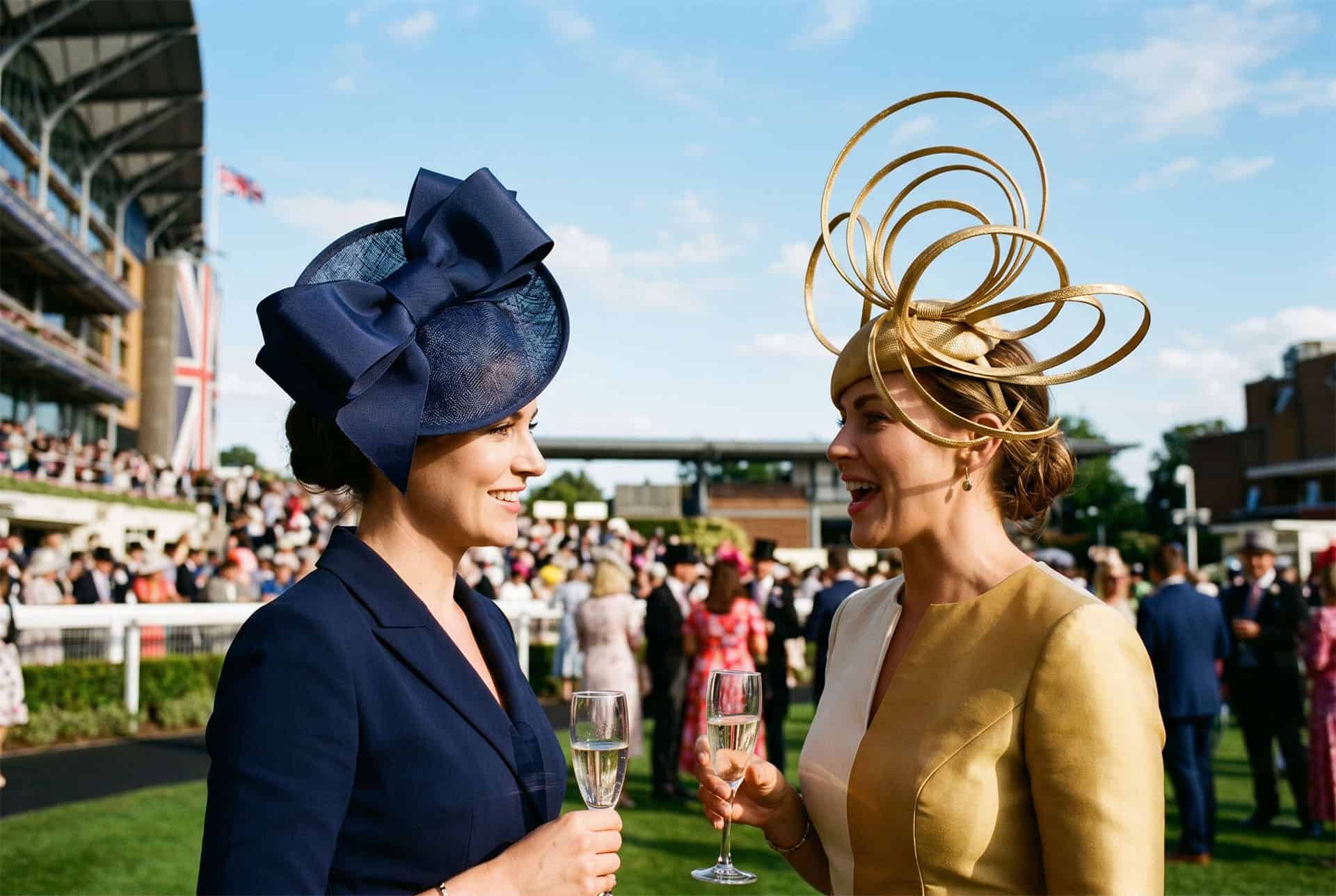
Fascinator Hats and the Theatre of British Summer Racing
Each British summer, the thunder of hooves is matched only by the spectacle in the stands. Nowhere is this more apparent than at events like Royal Ascot and Glorious Goodwood, where fashion—particularly women’s millinery—has become as central to the experience as the racing itself. At the heart of this tradition sits the fascinator: a small yet striking headpiece that has evolved into a defining symbol of Ladies’ Day culture.
The Fascinator: From Tradition to Statement
A fascinator, typically a decorative headpiece attached by a clip or band, is less about practicality and more about visual impact. Often adorned with feathers, netting, or florals, it represents a modern evolution of the historic requirement for women to cover their heads in formal settings.
Its roots stretch back to aristocratic traditions where elaborate headwear signified status and refinement. Over time, particularly through the influence of British racing culture, fascinators have become both more accessible and more expressive.
Today, they are not just accessories—they are statements of identity.
Ladies’ Day: Where Fashion Takes Centre Stage
Ladies’ Day, most famously associated with Royal Ascot Ladies’ Day, is often described as a “see and be seen” occasion.
While horse racing remains the official focus, fashion—particularly hats and fascinators—dominates media attention and public imagination.
The tradition dates back to the 19th century, when societal norms and royal influence encouraged elegant dress and head coverings.
Today, that expectation has evolved into a celebration of creativity, individuality, and spectacle.
Colour, Coordination, and Creativity
One of the defining features of fascinator culture is its embrace of colour. At events like Ascot and Goodwood, racegoers arrive in palettes ranging from soft pastels to bold fuchsias and striking monochromes.
Outfits are rarely accidental. Dresses, shoes, handbags, and fascinators are carefully coordinated, often planned weeks or months in advance. For some, the fascinator is chosen first, acting as the centrepiece around which the entire outfit is built.
Styles vary widely:
- Wide-brimmed hats for dramatic elegance
- Feathered fascinators for playful flair
- Minimalist headpieces for understated sophistication
- “Hatinators” blending hat structure with fascinator lightness
This diversity ensures that no two looks are ever quite the same.
Age and Expression: A Generational Shift
Historically, race-day fashion was dominated by older, upper-class women adhering to strict dress codes. While those traditions still exist—particularly in exclusive enclosures—the demographic has broadened significantly.
Younger attendees, especially those in their late teens and twenties, are now a visible presence at events like Ladies’ Day, bringing with them a more experimental and trend-driven approach.
- Younger racegoers often favour bold colours, unconventional shapes, and statement pieces
- Middle-aged attendees may blend classic tailoring with modern millinery
- Older generations often maintain traditional elegance, favouring structured hats and refined palettes
This generational mix creates a dynamic visual landscape where heritage meets contemporary fashion.
From High Society to Inclusive Spectacle
British horse racing events were once firmly rooted in aristocratic culture. Royal Ascot, founded in 1711, remains closely associated with the royal family and formal dress codes.
However, modern race days—particularly at venues like Aintree Racecourse and Goodwood—have become more inclusive social events.
Today’s crowds reflect a wide cross-section of society:
- Fashion enthusiasts and influencers
- Groups of friends celebrating summer
- Families and first-time racegoers
- Traditional racing fans
For many, attending is less about betting on horses and more about participating in a shared cultural experience—one defined by style, celebration, and social connection.
The Economic and Cultural Impact
Fascinators and race-day hats have created an entire ecosystem of designers, milliners, and stylists. For many in the fashion industry, events like Ascot are comparable to red carpet moments, offering a platform for creativity and visibility.
Moreover, competitions such as “Best Dressed” or “Best Hat” reinforce the importance of fashion within these events, encouraging attendees to push boundaries and invest in standout pieces.
More Than Just an Accessory
Ultimately, the fascinator has transcended its role as a simple accessory. It is:
- A nod to British heritage
- A vehicle for personal expression
- A symbol of occasion and celebration
At summer racing festivals, it transforms the crowd into a living exhibition of design and identity—where every headpiece tells a story.
Conclusion
From the refined lawns of Royal Ascot to the relaxed glamour of Glorious Goodwood, fascinators have become inseparable from the British racing experience.
They bridge past and present, tradition and innovation, exclusivity and inclusivity. On Ladies’ Day especially, they ensure that while horses may win races, it is often the hats that capture the headlines.